
When you click on a sponsoring school or program advertised on our site, or fill out a form to request information from a sponsoring school, we may earn a commission. View our advertising disclosure for more details.
This field is only going to get bigger as more people see what we can do.”
Susan Underkoffler, MFS, Instructor and Director, University of Florida Wildlife Forensic Sciences and Conservation Program
In March of 2026, an international group of forensic scientists gathered in Charleston, South Carolina, for a weeklong conference. The keynote speaker was the chief biometric scientist for the FBI Laboratory’s Biometric Analysis section. Attendees had access to workshops on forensic photography, roundtables on DNA extraction, and a proficiency test on ivory identification. Why ivory identification? Because ivory is one of the most high-value illicit wildlife products, and this conference was hosted by the Society for Wildlife Forensic Science, a leading professional organization in the small but vital field of wildlife forensics.
Wildlife forensics applies science to legal cases involving non-human biological evidence. Forensic scientists in this discipline assist in species identification, determining animal cause of death, assessing whether wildlife law has been violated, and linking suspects, victims, and crime scenes through physical evidence. Their work supports investigations into poaching, trafficking, and trade in protected species. Amidst the formal and informal specializations of wildlife forensics, one can find forensic entomologists (insects!) and forensic ornithologists (birds!). Despite its niche status, the field has interests as vast as the animal kingdom.
Wildlife forensics is not new—California’s Wildlife Forensic Laboratory has been operating since the early 1950s—but it’s still far less well-known than its human-centric counterpart, despite being both scientifically rigorous and undeniably cool. The Clark R. Bavin National Fish and Wildlife Forensics Laboratory in Ashland, Oregon (established in 1988) curates a Feather Atlas that currently lists 438 species. Wyoming Game and Fish’s Wildlife Forensic and Fish Health Laboratory (also established in 1988) uses cementum annuli analysis for big game tooth-aging.
Like traditional forensic science, wildlife forensics applies science to the law. Many of the essential skills are the same. But this is not a traditional field, and it faces its own unique challenges—while also making a unique and crucial difference in the world.
Meet the Experts
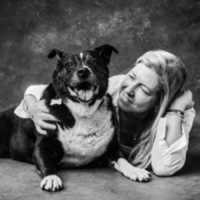
Susan Underkoffler, MFS
Susan Underkoffler is program director, instructor, and forensic investigator at the University of Florida’s wildlife forensic sciences and conservation program. She earned her BA in conservation biology and her BA in scientific illustration from Arcadia University, and her master of forensic science (MFS) degree from Drexel University College of Medicine. At Drexel, she developed an animal forensic science track for the school’s graduate forensics program.
As a forensics manager for the Pennsylvania SPCA, Underkoffler developed the first forensics unit and handled all forensic responsibilities for animal cruelty cases, including crime scene documentation, evidence collection and processing, animal forensic examinations, necropsies, and courtroom preparation. She has traveled nationally as a professional consultant and educator for animal cruelty investigations. She has also conducted international research on areas such as primate behavior and habitat conservation in Equatorial Guinea, and elephant tracking, censusing, and behavior monitoring in Namibia.
Underkoffler is active in several professional organizations, including the Society for Wildlife Forensic Science, International Society for Animal Forensic Sciences, and the American Academy of Forensic Sciences.

James Creecy, PhD
Dr. James Creecy is an associate professor with the Department of Biology at the University of Central Oklahoma (UCO). He is a founding member of the UCO Center for Wildlife Forensic Science and Conservation Studies (C-FACS) and currently serves as the center’s co-director.
Prior to joining the UCO faculty, Creecy was a DNA analyst for the Oklahoma City Police Department Crime Laboratory. Since leaving the crime lab, his research interests have broadened to include the application of advanced genomic technologies and high-performance computational analysis to wildlife investigations. His primary research currently focuses on developing and improving the analysis of DNA evidence in wildlife cases using high-throughput sequencing and high-performance computational methods. With the support of local, national, and international partners, Dr. Creecy is working to advance the fields of wildlife forensic science, species conservation, and animal protection.
Applications of Wildlife Forensics
“I wish more people knew how absolutely important this discipline is to the overall health of not only environments, but the enforcement of laws throughout the world,” Dr. Creecy says.
Wildlife crime affects thousands of animal species across over 160 countries and territories, driving multiple environmental and societal harms (UN Office on Drugs and Crime 2024). It amounts to one of the world’s largest criminal activities, with the black market for illegal wildlife products worth up to $20 billion per year (Interpol 2023). Increasingly, the profits from wildlife crime are linked to the funding of groups who participate in armed violence, corruption, and other forms of organized crime.
Wildlife forensics experts play a crucial role in investigating, prosecuting, and defending wildlife crime. Through scientific rigor, they can link animal products to their origin, identify particular species, and help determine whether a wildlife law was violated. Often, they’re starting with a singular piece of evidence, which can be quite small: a bone that might be ivory, a feather that may belong to a protected avian species.
“Most cases involve just pieces and parts,” Underkoffler says. “We don’t have a body. We have a shoe, or a handbag, and we need to discern which species it’s from. A lot comes down to lab testing and genetics work.”
In 2026, scientists at the Victoria Falls Wildlife Trust Laboratory applied a new genetic profiling technique to link the DNA of seized lion parts to a specific male lion illegally snared and killed two years prior (Traffic 2026). The suspects received 24-month prison sentences as a result. This was a notable advance for wildlife forensics: moving from species identification (i.e., this DNA belongs to this type of lion) to individual identification (i.e., this DNA came from this particular lion).
High-profile poaching cases attract the most media attention, but it’s the overall impact of wildlife crime that is most deplorable. The US is one of the world’s major markets for illegal wildlife and wildlife products, estimated to be worth $3.2 billion per year (PLOS ONE2021). Those products are often sickeningly packaged as luxury goods: ivory, caviar, reptile skins, and other animal parts.
“It’s devastating,” Dr. Creecy says. “And that’s the nature of why we do what we do.”
Wildlife forensics is also used in a wide range of environmental and conservation enforcement cases. Experts may be called upon to determine whether an animal was killed intentionally or illegally, and how. The field has a broad reach, extending into illegal fishing, seafood fraud, and import enforcement. Wherever there is a potential intersection between animal evidence and the law, wildlife forensics plays a role.
“Wildlife can be the victim of crime, the cause of crime, or witness to a crime,” Dr. Creecy says. “In all three of those situations, the forensic question may be different, but we have tools that can support investigative hypotheses about what has gone on in the perpetration of a crime.”
Challenges in Wildlife Forensics
Wildlife forensics is extraordinarily diverse. Unlike human forensics, which operates from the same anatomical starting point, wildlife forensics needs to service the width of the zoological map. Evidence can arrive in the form of a leather handbag, an ivory necklace, a tin of caviar, or a partial lion carcass.
“We need databases,” Underkoffler says. “If you get a piece or a part of something, and you think it’s a particular subspecies, you can’t do anything if you don’t have a database to compare that sample to.”
Wildlife forensics is under-resourced. Funding is needed to start new labs, keep existing labs going, and furnish equipment to labs that need it. Research on a particular species can get scrapped or delayed—especially if the profitability of its findings fluctuates—leaving a hole in wildlife forensics databases. That reduces the overall efficacy of wildlife forensics, which in turn can further reduce funding. Meanwhile, experts are retiring, while wildlife crime remains pervasive.
“The people who are on the front lines working these cases are always playing catch-up,” Dr. Creecy says. “That can become very difficult and discouraging in some instances.”
Another issue is a lack of uniform standards. The field is far from standardless (SWFS has published standards and guidelines for many areas), but the sheer scope of its mandate, which stretches across thousands of species and jurisdictions, makes universal adherence difficult. Wildlife forensics experts need databases vetted for forensic use; they need processes that meet legal and scientific standards (Animal Genetics 2025).
“We need everyone up to speed with the same standards,” Underkoffler says. “Often, I’ll go to another country, and everyone’s doing things a different way.”
Wildlife forensics is still relatively little known compared to traditional human forensics. That lack of awareness has consequences: investigators may not properly collect evidence; the right test may never be ordered; prosecutors may fail to build the strongest possible case; policymakers may not fund the labs and research the field needs to thrive. Wildlife crime, too, is far less understood by the public than its global footprint demands. In an ecosystem where the loss of one species affects several others, with ripple effects across our shared habitat, the need for wildlife forensics is as dire as ever.
“We need to get the public knowledgeable about why this matters,” Underkoffler says. “We’re losing species fast. We can do something about it. We need to get the word out there.”
The Future of Wildlife Forensics
Wildlife forensics is still evolving, and new research could give it a boost. For several years, Dr. Creecy and his team have been targeting one of wildlife forensics’ persistent technical bottlenecks: the lag time in validating PCR-based DNA tests for newly targeted species. Traditional PCR-based DNA testing often relies on primers: short DNA sequences that tell the test which region to focus on. That means new species or products can require new primers and new validation work before results are court-ready.
But Dr. Creecy’s research has focused on a methodology that could analyze DNA from any species without relying on those primers, potentially allowing forensic labs to respond more quickly as poaching and trafficking patterns shift. He and his colleagues aim to publish their findings soon.
“The hope is we won’t be playing catch-up anymore,” Dr. Creecy says. “And we can actually start to get ahead.”
Wildlife forensics is also benefiting from technological advances. As demonstrated by the 2026 Victoria Falls case, DNA testing and data analysis are improving in their capabilities, moving from species identification towards even more specific, contextual matches. Better databases mean less friction from shipping samples across jurisdictions, reduced permitting and simpler logistics. And, in the fight against wildlife crime, cheaper and better drones are allowing scientists, investigators, and law enforcement to search previously hard-to-access and sometimes unsafe poaching areas.
“The technology is awesome, and if we can harness it to our advantage, I think it’s going to take us really far,” Underkoffler says. “The future is going to be much bigger. We’re going to see this field expand in several different directions, but all working together with the same focus.”
Wildlife forensics is a small but growing field, and the future is exciting. The next generation of students and scientists will help shape it: passionate and committed. This is, to risk cliché, more than just a career. Wildlife forensics is a vital area of forensic science, and those who practice it make a meaningful impact on our shared environment.
“We’re finally getting more awareness,” Underkoffler says. “We’re getting requests from agencies to come in and do training for them, even if it’s just the basics, helping them do whatever they can do to get these cases to court. There are very few people with these kinds of niche skills, but they are out there. They do exist. This field is only going to get bigger as more people see what we can do.”
“As challenging as the road ahead looks, this discipline is important,” Dr. Creecy says. “We need more students and professionals in this field, and they’ll need endurance and perseverance when things get hard, because they probably will get hard. But I have a lot of faith in the next generation. I go to conferences and meet people from all over the world, and they haven’t lost hope. They have a great deal of love for what they do. There’s a true sense of job satisfaction.”