
When you click on a sponsoring school or program advertised on our site, or fill out a form to request information from a sponsoring school, we may earn a commission. View our advertising disclosure for more details.
It’s far more important that a person can prove that they can work evidence than that they can take a test.
Ashley Hall, PhD, Director of the Forensic Science Graduate Program, University of California, Davis
Forensic science is one of those fields that looks straightforward from the outside. You get the degree, you get the job, you work the cases. And somewhere in that mental picture, many aspiring forensic scientists might assume that certifications play the role they play in other professions, a marker of expertise, a signal to employers, a box to check on the way up.
In fields like healthcare, finance, and information technology, certifications can be the difference between getting the interview and getting passed over. It’s a reasonable assumption to carry into forensic science. It also happens to be largely wrong.
The reality of how competence is measured, demonstrated, and rewarded in forensic science looks almost nothing like what most people expect. There is no national licensing requirement. There is no certification body whose stamp of approval you need before you can work a case or take the stand. With the exception of Texas, the only state that requires licensing for forensic analysts and technicians, the field operates on a different system entirely, one built around education, rigorous in-lab training, and a demanding cycle of proficiency testing that follows scientists throughout their entire careers.
That distinction matters more than ever right now. The Bureau of Labor Statistics projects that employment of forensic science technicians will grow 13 percent through 2034, much faster than average. But growth doesn’t mean easy entry. Each open position in a crime lab can draw anywhere from 100 to 200 applicants, according to Dr. Ashley Hall, director of the forensic science graduate program at the University of California, Davis, and a forensic DNA researcher with more than 20 years in the field. In a landscape that competitive, understanding what actually moves the needle on a career, and what doesn’t, is information worth having before making decisions about how to spend time and money.
“You don’t hear about the thousands of forensic scientists who are passing proficiency tests, who are giving excellent testimony in court,” Dr. Hall says. The public conversation about forensic science tends to focus on the failures, the scandals, the cases where evidence was mishandled or testimony was fabricated. What gets far less attention is the infrastructure of accountability that governs the vast majority of working forensic scientists.
“Training for a DNA analyst is at least 18 months in the lab,” Dr. Hall notes. “Once you get hired, your training is at least 18 months. It can often take longer. In addition to the long training period, then there’s proficiency testing. You are caught up in requirements for continuing education every year, so you are constantly having to learn and keep up with the field and prove that you can do the work,” she shares.
That doesn’t mean certifications are worthless. There are contexts where they matter, particularly in the courtroom, where a credential can shore up a jury’s confidence in an expert witness. But they are far from the most important thing a forensic scientist can do to build a career. “It’s far more important,” Dr. Hall says, “that a person can prove that they can work evidence than that they can take a test.”
Meet the Expert: Ashley Hall, PhD
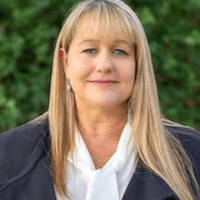
Dr. Ashley Hall is the director of the Forensic Science Graduate Program at the University of California, Davis Forensic Science Center. Her background is in forensic DNA, and she has spent more than 20 years as an academic researcher in the field. She teaches DNA courses within the graduate program and leads a research lab with a focus that goes beyond the question most people associate with DNA evidence. Rather than asking only who is present at a scene, her lab investigates activity-level evaluations to determine how the DNA got there in the first place.
Are Certifications Required in Forensic Science?
For anyone coming from a field where certifications carry serious weight, the landscape of forensic science can be surprising. Outside Texas, the only state that requires licensing for analysts and technicians, there is no formal requirement to hold any certification to work as a forensic scientist in the United States.
The certifications that do exist span a range of disciplines. The American Board of Criminalistics, known as the ABC, is the most prominent. The International Association for Identification certifies crime scene investigators, bloodstain pattern analysts, and latent print examiners. The American Board of Forensic Toxicology, forensic anthropology organizations, and medical-legal death investigator groups all offer their own credentials. But none of them are mandatory.
“The ABC is the big one,” Dr. Hall explains. “It requires you to take a general test. You can take discipline-specific tests. It is not overly common. It’s definitely not expected of somebody new in the field. You don’t need to go and get it before you go into the field.”
For those who do pursue it, the ABC designation carries a specific kind of professional weight. “It is evidence that you know what you’re doing,” Dr. Hall says. “But it’s not required, and not having it would not prevent you from moving forward in your career.”
Why Certifications Can Still Matter: The Courtroom Factor
While certifications may not be required to get hired or advance through a career, there is one setting where they can make a meaningful difference. When a forensic scientist takes the stand as an expert witness, everything on their resume becomes part of the story the jury hears.
“When you’re qualified as an expert witness, the lawyers run through your qualifications, and the more qualifications you have, the better you come off to the jury as more knowledgeable and more expert,” Dr. Hall explains. “That’s why things like crime lab analysts who also work as professors look really good, because it proves how knowledgeable they are in their field. Anything that you as a lay person would hear and say, ‘Oh yeah, that person knows what they’re talking about,’ that plays well in court.”
It is less about the certification itself and more about what it communicates to a room full of non-scientists. A credential is a shorthand that juries understand, a signal that someone has been evaluated and found competent by an outside body. In that context, having one doesn’t hurt.
But certifications are not the only thing that comes up during voir dire. Opposing counsel can also ask about proficiency tests, which opens a much bigger conversation about how competence is actually measured and maintained in forensic science.
The Real Benchmark: Proficiency Testing
If certifications are optional, proficiency tests are not. They are built into the structure of the job itself and represent the field’s actual, ongoing standard for assessing whether a scientist can do the work.
Every technique a forensic scientist is trained and signed off to use on casework requires a corresponding proficiency test. DNA analysts are tested twice a year. Tests are administered both internally by the lab and externally by third-party companies that collect samples, evaluate the results, and return them. The process never stops, no matter how experienced a scientist becomes.
“In every technique that you do regularly, every technique that you’re signed off on, that you’re trained and are allowed to use on casework, you have to do a proficiency test and prove that you can get the right answer,” Dr. Hall says. “Forensic scientists constantly have to prove that they are able to run the tests that they’re doing and that they’re testifying to. That’s evidence of excellence in your field. That’s more important than a certification; it’s proof that you can work the evidence and you are consistently producing good results.”
Those results don’t stay in the lab. They can follow a scientist into the courtroom.
“Lawyers can bring them up in court during voir dire. One of the things that they can ask is, ‘Have you failed a proficiency test?’ And obviously you have to be honest,” Dr. Hall notes. “They are really important, and they’re the evidence that a person can do a good job and can come up with the right answer.”
When to Pursue a Certification
For professionals who do want to pursue an ABC designation or another credential, timing matters. Certification is not something to chase before entering the field, and it is not something graduate programs teach toward. It belongs later, after training is complete, after casework has accumulated, and after a scientist has a real foundation of hands-on experience to draw from.
“It would be in their job after they’ve gone through training,” Dr. Hall explains. “They’re now qualified as an analyst in their lab. That means they have a little bit more hands-on experience. That would be the time to do it.”
The ABC designation, in particular, is less a starting point than a milestone, something that reflects a body of work rather than anticipating one. “I could see where getting an ABC certification, becoming a diplomat of the ABC, is something that you work through your career as you have more experience,” Dr. Hall says. “It’s just evidence of excellence in your field.”
What graduate programs focus on is preparing students to enter the field ready to be trained, to pass their proficiency tests, and to handle evidence well. “We teach them to get going in the field,” Dr. Hall says, “and to be trainable and pass their proficiency tests and to do well with evidence.”
The Case for a Master’s Degree
If there is one decision that carries more weight than any certification in forensic science, it is the decision to pursue a master’s degree. A bachelor’s degree gets a candidate in the door to apply. What happens after that is a different story.
“Most jobs require a minimum of a bachelor’s degree, but every open position gets about 100 to 200 applicants,” Dr. Hall says. “So it becomes very competitive. Somebody who has a master’s degree proves they have done graduate work, and especially a thesis-based master’s degree, they’ve gone into the lab and they’ve done lab work. They’ve done troubleshooting. So they’re more familiar in the lab. When I talk to my colleagues in the crime labs what they like about students who come with a master’s degree is that they’ve had lab experience.”
The advantage doesn’t stop at hiring. A master’s degree also determines how far a career can ultimately go. “Absolutely do a master’s degree, and not just for entry-level work. To advance in the field, you need to have a master’s degree. You will quickly max out in how far you can go with a bachelor’s degree. A master’s degree can be a terminal degree in forensic science, in that you can advance all the way to the top of the field with a master’s degree,” she says.
Advice to Undergraduate Students
For students finishing a bachelor’s degree and weighing their next move, Dr. Hall’s recommendation is direct: keep going, and do it now.
“I would definitely recommend that they go to a master’s program while they’re in school, while they’re in motion. Just go ahead, spend those extra couple of years. It’s going to help you get a job. It’s going to help you advance in the field. At some point, if you want to advance in the field, you will need a master’s degree. So just go ahead and do it,” she urges.
The reason timing matters comes down to the nature of the research component. Classes have fixed schedules. Lab research does not, and trying to manage that alongside a full-time job is a combination that consistently trips students up.
“Otherwise you may have to do it while you’re working, and that is difficult. I have students who do it while they’re working, and they have a very hard time completing the research. Classes are less difficult, but research isn’t as defined time-wise. You go into the lab until you’re done. So I would advise students: just go ahead, get your degree,” she adds.