
When you click on a sponsoring school or program advertised on our site, or fill out a form to request information from a sponsoring school, we may earn a commission. View our advertising disclosure for more details.
Crimes aren’t solved by one type of forensic discipline in a laboratory. It takes a village.”
Henry F. Fradella, JD, PhD, Director and Professor, School of Interdisciplinary Forensics, Arizona State University
Forensic science used to mean a lab coat and a microscope. Today it increasingly means DNA analysts working alongside forensic psychologists, digital examiners, anthropologists, and lawyers, all reading the same case from different angles.
For decades, forensic science education followed the model of the crime lab itself. Students picked a bench and stayed there. A 2009 National Research Council report challenged that model, finding that forensic science’s disciplines operated in isolated silos without a unified strategy for research or validation, and called for broader, more rigorous scientific standards across the field. The report reshaped how forensic science is taught and practiced, and its influence is still visible in how programs are being redesigned today.
The demand for that talent isn’t slowing down. The Bureau of Labor Statistics (2026) projects that employment of forensic science technicians will grow 13 percent from 2025 to 2035, much faster than the average for all occupations, adding roughly 2,700 openings a year. Employers filling those openings increasingly want more than a technician who can run one type of test. They want someone who understands how their piece of a case fits into the whole.
Arizona State University built its School of Interdisciplinary Forensics around that idea, and it says it’s the only program of its kind in the country. Just a few years old, the school pairs traditional lab training with coursework in forensic psychology, digital forensics, law, and more, so students graduate fluent in more than just their own specialty. “Modern forensic investigations increasingly depend on collaboration across specialties, and interdisciplinary education reflects that reality,” says Henry Fradella, JD, PhD, director of the school.”Crimes aren’t solved by one type of forensic discipline in a laboratory. It takes a village.”
Keep reading to learn what sets an interdisciplinary forensics education apart, how cross-disciplinary teams actually solve cases, and what to look for in a program.
Meet the Expert: Henry F. Fradella, JD, PhD
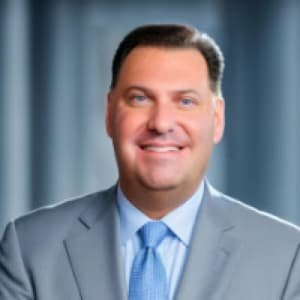
Dr. Henry (Hank) Fradella is the director and a professor at Arizona State University’s School of Interdisciplinary Forensics. He holds a JD from George Washington University and a PhD in interdisciplinary justice studies from ASU, and has spent more than three decades studying the intersection of law, behavioral science, and forensic practice.
Professor Fradella also serves as a professor in ASU’s School of Criminology and Criminal Justice, an affiliate professor at the Sandra Day O’Connor College of Law, and core faculty in the program on law and behavioral science. Fradella is the author, co-author, or editor of 14 books and has served as editor-in-chief of the Criminal Law Bulletin since 2019.
What Makes a Forensics Program Interdisciplinary
“Interdisciplinary forensics is the study and application of multiple scientific, legal, behavioral, and investigative disciplines to answer questions arising in legal and public safety contexts,” Professor Fradella says. Traditional forensic science programs concentrate on laboratory sciences: DNA analysis, toxicology, trace evidence. ASU’s program layers in forensic psychology, digital forensics, crime scene investigation, law, criminology, and medicolegal death investigation, which includes forensic anthropology. The school even offers coursework in humanitarian forensics and wildlife forensics.
That doesn’t mean the degree is less rigorous in any one area. “It is a forensic science program,” he says. “We absolutely train people to go work in laboratories if that’s what they want. Everybody gets some training in forensic biology and forensic chemistry. What differentiates our program from other forensic science programs is that our students will also study some forensic behavioral science and some digital forensics, in the same way that our digital forensics students aren’t just going to study computer science. They have to learn a little bit about forensic behavioral science and forensic laboratory science too.”
That cross-training runs about two semesters, not enough to qualify a graduate to run a lab bench in a field outside their major, but enough to make them fluent in the discipline next door.
“It’s not that they’re going to be trained to work in a laboratory, but they at least have to understand what happens in a lab and understand the nomenclature and the limits of different forensic techniques,” Professor Fradella explains. “That’s the goal of the interdisciplinary approach. You still get the chance to specialize in what you want to specialize in, but you’ll also have a better sense of what all the other people are doing.”
That range pays off later in a career too. A DNA analyst who has only studied forensic biology and serology stays a DNA analyst. One who has also studied behavioral science, chemistry, or environmental science has options such as moving into wildlife and environmental forensics, shifting into research on the biological roots of human behavior, or advancing into lab management. “That’s what our program is designed to do,” Professor Fradella says.
How Interdisciplinary Teams Solve Cases
“Effective forensic work is fundamentally collaborative,” Professor Fradella notes. “No single professional has all of the expertise necessary to fully understand a complex case.”
Medical examiners and forensic pathologists determine cause and manner of death. Law enforcement and crime scene investigators document and collect evidence. Laboratory scientists analyze physical evidence. Digital forensic examiners recover electronic data. Behavioral experts weigh in on offender or victim behavior. Legal professionals make sure evidence holds up under constitutional and evidentiary standards.
“The most successful investigations occur when each expert understands both the strengths and limitations of their own discipline while appreciating the contributions of others,” he says. “Good communication and mutual respect are essential because each perspective adds another piece to the overall picture.”
That collaboration plays out in ASU’s own cold case work. Professor of Practice April Stonehouse spent 23 years as a forensic serologist and DNA analyst before joining the school, according to ASU News. She now pairs forensic biology students with forensic anthropology students on cold case work.
“She rose through the ranks in her forensic practice, and now works on teams that help solve cold cases, with our forensic anthropology students working in tandem with the forensic biology students,” Professor Fradella says. “That team approach has helped us solve some cold cases for the state of Arizona and beyond.” ASU’s Cold Case Symposium, co-hosted with Purdue University’s Department of Entomology since 2022, now draws experts, law enforcement, and victims’ families from across the country, not just Arizona.
Forensic entomology, the study of insects at a death scene, shows how far that collaboration can stretch. Insect life cycles have long helped investigators estimate time of death. ASU students are also learning to extract DNA from those same insects back in the lab, a technique that can reveal poisons an insect ingested while feeding on a decomposing body, an application that recent forensic research confirms is a growing subfield known as forensic entomotoxicology. “That’s something that entomologists have not been trained to do in the past,” Professor Fradella adds.
Why Forensic Science Is Moving Toward Interdisciplinary Work
The push toward interdisciplinary training isn’t unique to ASU. It follows a broader reckoning that started with a 2009 report. “The biggest part of it was driven by the National Academy’s National Research Council report that came out in 2009, which basically said all these little silos in forensics aren’t doing a particularly good job, and we’ve got to broaden those fields to integrate more rigorous scientific training and validation,” Fradella explains.
Fingerprint analysis is a case in point. Investigators still don’t have a reliable error rate for the technique, and some older methods have already been invalidated.
“What if we harnessed machine learning and artificial intelligence to help do that faster and with better accuracy, taking some of the human guesswork out of it?” Fradella asks. “And what if we developed standard operating procedures that involved forensic behavioral scientists to prevent confirmation bias and tunnel vision from creeping into the way analysts approach their analysis of fingerprints? That’s what we mean by saying we need to abandon the unilateral, disciplinary approach to forensic sciences and instead use a broader base. That is the future.”
Employers are pushing for the same shift. Technical skill alone isn’t enough anymore. “Employers are telling us it’s great that I’ve got somebody who knows how to do this particular thing and do it well, but I really need someone who can write reports well and critically think well and express themselves orally and in writing so that they can testify,” Fradella says. “They understand a little bit about the law and public policy so that they’re ready to advance in their fields beyond just being a technician, and that is directly responsive to the feedback we got from employers as we designed the majors.”
Advice for Prospective Students
Professor Fradella’s advice to anyone considering the field comes down to four things.
Build a Foundation in Critical Thinking
“Develop a strong foundation in critical thinking and scientific reasoning,” Fradella advises. “Technology and investigative techniques continue to evolve, but the ability to evaluate evidence objectively remains indispensable.”
Get Experience Outside the Classroom
“Seek opportunities for experiential learning through internships, research, or volunteer work,” he recommends. “Classroom knowledge is important, but seeing how professionals work together in practice provides invaluable perspective.”
Stay Committed to the Pursuit of Justice
“Forensic careers are ultimately about serving the pursuit of justice,” Fradella says. “Whether working in a laboratory, at a crime scene, in a courtroom, or in a medical examiner’s office, professionals must maintain scientific integrity, communicate clearly, and remain committed to objectivity even when cases are challenging or emotionally difficult.”
Look for Programs That Keep Career Options Open
For students weighing an interdisciplinary program against a traditional, single-discipline one, Fradella points to where the research money is headed. The National Institute of Justice’s Forensic Science Strategic Research Plan, most recently updated in January 2025, and its $13.6 million round of forensic science research funding both prioritize cross-disciplinary work over narrow specialties.
“You want to be competitive. You want to have a knowledge base that allows for your career growth in the future,” Fradella continues. “You want to have a knowledge base that allows you to be a part of interdisciplinary teams that will not only be able to do their jobs more effectively, solving crimes and preventing wrongful convictions, but also to be a part of transdisciplinary research teams.”
He also points to career flexibility as a reward in its own right. Interests change after graduation, and a broader knowledge base keeps options open.
“We all think when we’re in college, this is what I want to do, and then you graduate, and you start doing it, and you go, maybe that’s not what I want to do,” Fradella says. “Our goal is to make sure that people have options.”
The Future of Forensic Investigation
That commitment to collaboration doesn’t stop at the borders of a single case. Fradella points to humanitarian forensics, investigations into war crimes and mass graves, as an example of interdisciplinary work at its highest stakes.
“You’ve got war crimes, you’ve got mass graves,” he says. “MDs trained in forensic pathology absolutely have an important role to play there, but so do entomologists, forensic anthropologists, and forensic chemists who can analyze the soil. All of those people need to work together in teams.”
Digital evidence now touches every part of that work too, from the interrogation room to the courtroom. “It takes properly trained law enforcement officers conducting interrogations who understand the behavioral science dynamics at play when people are being interviewed,” Fradella continues. “It takes laboratory technicians who know the state of the art in their field, and even more, understand its limits, in ways that allow them to grow professionally as technology and science advance, because they’re intertwined today. Digital evidence is infused in every single part of the forensic enterprise now.”
“That is what we are trying to change in the way that we educate the future forensic practitioners,” Fradella says, “both in the United States and globally.”

Kimmy Gustafson
WriterKimmy Gustafson’s expertise and passion for investigative storytelling extends to the world of forensics, where she brings a wealth of knowledge and captivating narratives to readers seeking insights into this intriguing world. She has interviewed experts on little-known topics, such as how climate crimes are investigated and prosecuted, and has written for ForensicsColleges.com since 2019.