When you click on a sponsoring school or program advertised on our site, or fill out a form to request information from a sponsoring school, we may earn a commission. View our advertising disclosure for more details.
What makes good true crime is something that is immersive and revealing—immersive into a world that’s new to the reader, and revealing of that world. You’re learning something beyond the police report.”
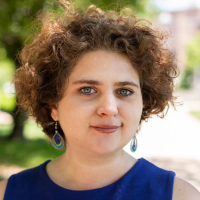
Claudia Rowe, Pulitzer Prize Nominee, Journalist, and Author of The Spider and the Fly
True crime books have been pulling readers in for decades, and the reasons go deeper than simple fascination with the grotesque. Psychologists who study the genre point to the same appeal that draws people to mystery fiction: the drive to understand motive, to impose order on chaos, and to ask how a person gets here. The difference is that in true crime, the body was real, and the grief is ongoing.
But the best books in the genre do something more than satisfy that appetite. They use a crime as a door into a world the reader would otherwise never enter: a subculture, a psychology, a community shaped by forces stretching back generations.
Claudia Rowe knows this territory better than most. A journalist for 35 years, twice nominated for the Pulitzer Prize, and a member of the Seattle Times editorial board, she wrote the true crime memoir The Spider and the Fly (2017), which won the Washington State Book Award. Her 2025 follow-up, Wards of the State, was a finalist for the National Book Award in Nonfiction. In an interview, Rowe shares what separates a great true crime book from everything else on the shelf.
Her answer was not about body counts or courtroom drama: “What makes good true crime is something that is immersive and revealing—immersive into a world that’s new to the reader, and revealing of that world. You’re learning something beyond the police report.”
She also offered a working definition that cuts through a genuinely sprawling genre. In a true crime book, she argues, “the search for understanding the crime is driving the narrative.” That’s what distinguishes it from, say, a crime memoir or a social history that touches on violence. The crime itself is the engine.
With that framework in mind, here are ten books that earn their place on the list.
Methodology: How the Best True Crime Books Were Selected
Drawing on her 35 years of experience as a journalist and her own work as a true crime author, Rowe uses three main criteria to evaluate books in the genre.
Depth Beyond the Crime
“I like true crime that goes way beyond the crime,” Rowe says. “I’m not so terribly interested in the crime itself. I’m interested in the forces that shape a person.” For Rowe, a great true crime book treats the crime as a starting point, not a destination. It goes into the psychology, the community, the history, or the subculture surrounding what happened.
She points to Say Nothing as an example: “It’s about a crime, but what it’s really about is the Troubles in Ireland, exploring a history and a political history behind the disappearance of this young woman.” Books that only recite what happened, without asking why or what it reveals, fall short of this standard.
Elevated Writing
“There’s good writing, and there’s not good writing,” Rowe says plainly. She is emphatic that literary quality is not a bonus feature in true crime but a core requirement. A lot of books in the genre, she notes, simply restate police reports. What she looks for instead are the tools of fiction applied to fact: scene-setting, dialogue, pacing, a sense of rhythm. “I’m looking for a sense of the way words sound, all the kinds of tools of novels,” she explains.
“I like the writer to exert some effort and not just simply disgorge all their information.” She uses the analogy of a meal: the information might be nutritious, but presentation determines whether anyone actually consumes it.
Honesty About the Writer
Some of the books Rowe admires most are ones in which the author’s own psychology is part of the story: “I like a book that also illuminates something about the writer, where the writer is showing themselves too. They are exposed,” she says.
This is something she pursued deliberately in The Spider and the Fly, her account of corresponding with a serial killer: “One thing I was trying to do was show why this guy picked me. He saw something in me that was manipulatable, that he thought was exploitable, and the book is kind of me getting that and pulling myself out of that.”
She finds the same quality in Blood Will Out, where Walter Kirn examines his own seduction by a likely murderer. That willingness to turn the lens on the reporter, not just the subject, is what she looks for.
In Cold Blood – Truman Capote (1966)
This is the book against which most everything else in the genre gets measured. In 1959, two men killed the Clutter family in a small Kansas farming community. Capote spent six years reporting in Holcomb, earning access to the killers themselves and reconstructing the crime and its aftermath in novelistic detail.
The result was something the genre had not seen before: a nonfiction account that read with the pacing and interiority of a novel. Capote called it a “nonfiction novel,” a term that made critics uncomfortable but has since become the standard to which serious true-crime writers aim. Rowe names it as an early model for what the genre can do. Its influence on every book that follows on this list is hard to overstate.
The Executioner’s Song – Norman Mailer (1979)
Gary Gilmore murdered two men in Utah in 1976 and then, when caught, insisted the state carry out his death sentence by firing squad. The case reignited the national debate over capital punishment. Mailer spent years reporting it, producing a 1,000-page account of Gilmore’s life, the communities he moved through, and the machinery of the justice system that ultimately shot him.
Most readers don’t consider it true crime. It tends to get shelved as literature. But Rowe argues it belongs squarely in the genre. “It goes deep into that community, into Utah, into all the forces that were at play in those crimes.” The book won the Pulitzer Prize. Its willingness to treat a killer’s interior life as worthy of sustained literary attention changed what nonfiction writers thought they were allowed to do.
Shot in the Heart – Mikal Gilmore (1994)
Mikal Gilmore is Gary Gilmore’s younger brother. Decades after Mailer’s book put Gary’s crimes at the center of a national conversation, Mikal wrote his own account of what it meant to grow up as that man’s sibling, in that family, in that house. The result is a memoir of unusual brutality and tenderness, a book about how violence travels through generations before it ever becomes a crime.
Rowe calls it true crime, and the classification holds: the Gilmore family’s story is inseparable from Gary’s crimes, and Mikal is working throughout to understand how those crimes happened. The book is also, Rowe notes, “quite brutal.” It is not easy to read, but it is hard to forget.
The Devil in the White City – Erik Larson (2003)
Erik Larson’s account of H.H. Holmes, a serial killer who operated during the 1893 World’s Fair in Chicago, is one of the most widely read true crime books of the past twenty years, and it earns that readership. Larson weaves two parallel stories: the construction of the fair itself, a massive engineering undertaking that nearly broke the men behind it, and Holmes’s methodical exploitation of the chaos it created.
What makes the book work is not the body count but the period detail: the smoke and noise and ambition of a city trying to prove itself to the world, and a predator who understood exactly how to disappear inside it. Rowe cites it among her favorites.
I’ll Be Gone in the Dark – Michelle McNamara (2018)
McNamara spent years obsessively investigating the Golden State Killer, a serial rapist and murderer who terrorized California in the 1970s and ’80s and was never caught. Not until the year after her book was published did DNA evidence finally identify him. McNamara died before she could finish the manuscript; her husband, Patton Oswalt, worked with her researchers to complete it.
The book is, as Rowe describes it, a procedural: “It’s really going into the investigation, the dead ends, years of investigating.” But it is also a portrait of obsession, a meditation on what it does to a person to spend years inside the mind of someone capable of enormous cruelty. McNamara’s voice, wry and precise and genuinely frightened, is what sets it apart from every other cold-case investigation.
Say Nothing – Patrick Radden Keefe (2018)
In 1972, Jean McConville, a widowed mother of ten, was dragged from her Belfast home by the IRA and murdered. Her body wasn’t found for thirty years. Keefe uses that crime as an entry point into the entirety of the Troubles: the ideology, the violence, the people who carried it out and those who were destroyed by it.
Rowe cites it as an example of true crime at its most expansive: “It’s about a crime, but what it’s really about is the Troubles in Ireland, exploring a history and a political history behind the disappearance of this young woman.” The research is staggering. So is the writing. Keefe manages to make the reader understand, without excusing, how ordinary people came to do terrible things.
Under the Banner of Heaven – Jon Krakauer (2003)
In 1984, Ron Lafferty and his brother killed their sister-in-law and her infant daughter in Utah, claiming divine instruction. Krakauer’s account of the crime moves in two directions at once: into the immediate events and psychology of the Lafferty brothers, and back through 150 years of Mormon history, fundamentalism, and the strains of violence that have occasionally run through it.
Rowe says she is drawn to books that show how historical forces from a century or two ago manifest in contemporary violence, and this is one of the clearest examples: “Obviously, if you are a Mormon, you’re going to probably have a problem with that book,” she acknowledges. “But I found it absolutely fascinating.”
People Who Eat Darkness – Richard Lloyd Parry (2012)
In the summer of 2000, Lucie Blackman, a 21-year-old British woman working as a hostess in Tokyo’s Roppongi district, disappeared. Her remains were found months later. Richard Lloyd Parry, then the Tokyo bureau chief for The Times of London, covered the disappearance from the beginning and spent the next decade following the case through its long, complicated trial.
The book he produced is not really a murder investigation. It is a portrait of a subculture: the shadowy world of hostess bars, Western women adrift in Japan, the particular way that city can swallow people who don’t know its rules. Rowe calls it one of the books that exemplifies what the genre can achieve: an account that uses a crime to illuminate an entire community and the forces that made it possible. It was shortlisted for the Orwell Prize and longlisted for the Samuel Johnson Prize.
Blood Will Out – Walter Kirn (2014)
In the 1990s, writer Walter Kirn befriended a man who called himself Clark Rockefeller, a charming, eccentric, apparently wealthy figure who claimed descent from the famous family. Kirn was taken in by him for years. Then the man was identified as a German immigrant named Christian Gerhartsreiter, suspected of murdering a man in California decades earlier.
Kirn’s book is partly about Gerhartsreiter, but mostly it’s about Kirn: about what in him was so susceptible to a particular kind of flattery, about the social machinery of status and aspiration that a skilled con artist can exploit. Rowe finds this dimension of the book particularly valuable. “I like a book that also illuminates something about the writer, where the writer is showing themselves too. They are exposed.” She draws a direct line from this quality in Blood Will Out to her own intentions in The Spider and the Fly.
The Spider and the Fly – Claudia Rowe (2017)
In the mid-1990s, Kendall Francois murdered at least eight women in Poughkeepsie, New York. Claudia Rowe, then a young crime reporter, began a correspondence with him while he was in prison. The book she eventually wrote about that correspondence is many things at once: a true crime account of the murders, a portrait of a depressed post-industrial city and the women it failed, and a memoir about a reporter who got closer to a killer than she should have and had to reckon with what that revealed about her own history.
Gillian Flynn called it “a must-read.” Robert Kolker, author of Lost Girls, called it “chilling, self-revelatory, and unforgettable.” When it was published in 2017, first-person true crime narrators were still unusual enough to seem strange. The book helped normalize that approach. It won the Washington State Book Award.

Kimmy Gustafson
WriterKimmy Gustafson’s expertise and passion for investigative storytelling extends to the world of forensics, where she brings a wealth of knowledge and captivating narratives to readers seeking insights into this intriguing world. She has interviewed experts on little-known topics, such as how climate crimes are investigated and prosecuted, and has written for ForensicsColleges.com since 2019.
Kimmy has been a freelance writer for more than a decade, writing hundreds of articles on a wide variety of topics such as startups, nonprofits, healthcare, kiteboarding, the outdoors, and higher education. She is passionate about seeing the world and has traveled to over 27 countries. She holds a bachelor’s degree in journalism from the University of Oregon. When not working, she can be found outdoors, parenting, kiteboarding, or cooking.